
Fish are congenital "diabetics"——Talk about the utilization of sugar in feed by fish
author: Shandong Arrow 01
2023-03-25
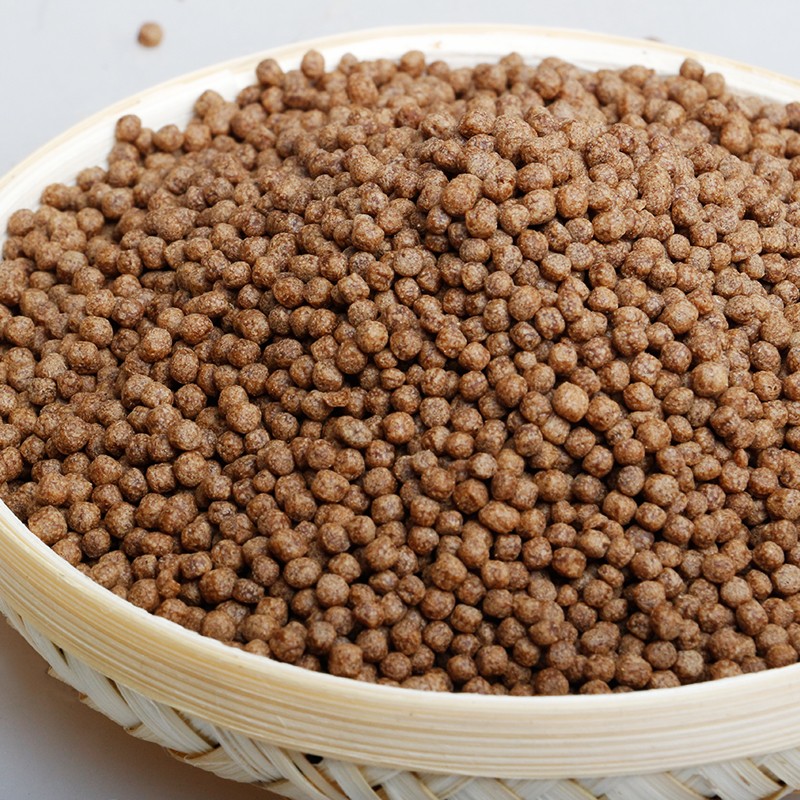
In recent years, with the continuous development of the aquaculture industry, the demand for fish meal is also increasing. As one of the most expensive raw materials in fish feed, it usually exists in high content especially in carnivorous fish. With the world The shortage of fishmeal resources within the scope, the price of fishmeal continues to rise, and the cost of feed is getting higher and higher. High-protein feed not only increases the cost of breeding, but also causes nitrogen pollution to the aquaculture water environment.
As one of the non-protein energy sources, carbohydrates are cheap and widely sourced, and proper use can effectively solve the above problems. Sugars are also important cheap energy substances in fish feed. Compared with mammals, the ability of fish to utilize carbohydrates is poor, and the appropriate dietary carbohydrate level is generally lower than 20%, which is considered to be a natural "diabetic".
Types And Sources Of Sugars In Fish Feed
The types of carbohydrates in fish feed are very wide, from highly digestible monosaccharides, disaccharides, oligosaccharides to insoluble and indigestible hemicellulose and cellulose, and the sources are very wide, from seaweed, algae and phytoplankton to refined grains and soy products, and more.
Sugar plays an important role in the process of life activities, and is the main source of energy required by all living organisms to maintain life activities.
Sugar is one of the necessary metabolic energy supply substrates for fish brain, gill tissue and red blood cells, and is closely related to the normal physiological function and survival ability of fish.
Digestion And Absorption Of Carbohydrates In Fish
The utilization of carbohydrates by fish includes metabolic processes such as digestion and absorption, decomposition and synthesis, and transformation. After the ingested polysaccharides are degraded into monosaccharides under the action of digestive enzymes, they are absorbed into the liver, oxidized and decomposed, or synthesized into other substances, such as glycogen, amino acids, fatty acids, etc. The main transport form of sugar in fish is blood sugar (glucose), and the main storage form is glycogen.
In addition, monosaccharides are also raw materials for other biologically active substances. The digested and absorbed sugars are mainly transported to various tissues and organs of fish in the form of blood sugar (glucose). very few parts. Among the various tissues and organs of the fish body, the liver is the main place for carbohydrate metabolism. Glucose is transported into hepatocytes by glucose transporters, and undergoes glycolysis and gluconeogenesis under the regulation of glucose metabolizing enzymes. In addition, metabolism such as glycogen synthesis and decomposition and pentose phosphate pathway are also involved.
The key enzymes in the glycolytic pathway include hexokinase (HK), glucokinase (GK), etc.; the key enzymes in the gluconeogenesis pathway include phosphoenolpyruvate carboxykinase (PEPCK), glucose-6-phosphate Enzyme (G6Pase), herbivorous fish, the stronger the glycolytic enzyme activity, the lower the gluconeogenesis enzyme activity.
Fish Have a Low Ability To Utilize Carbohydrates, But The Mechanism Of Glucose Metabolism That Produces This Phenomenon Is Still Under Debate. Studies Have Shown That The Factors That Lead To Low Sugar Utilization In Fish Can Be Divided Into 6 Types:
1) Insufficient fish insulin;
2) The carbohydrate metabolism function of fish is low, in the process of glycolysis, the lack of glucokinase (GK) and the activity of hexokinase (HK) are low;
3) The insulin secretion rate cannot keep up with the absorption rate of feed sugar, so that the absorbed glucose cannot be well utilized;
4) Less insulin receptors;
5) Fish are resistant to insulin;
6) The two processes of glucokinase catalyzing the phosphorylation of glucose in the liver and glucose-6-phosphatase catalyzing the hydrolysis of glucose-6-phosphate are unbalanced, which leads to the disorder of glucose homeostasis.
Effects Of Sugars In Feed On Fish
1 Effects Of Sugars On Fish Growth And Health
Adding an appropriate level of sugar in the feed can improve the physical properties of the feed, provide non-protein energy, reduce feed costs, and increase the growth rate of fish.
Adding an appropriate level of sugar in the feed can reduce the amount of protein and fat degraded for function, thereby improving the growth of fish and protein efficiency, and saving protein.
Adding an appropriate level of sugar in the feed can increase the formation of ATP, which is beneficial to the activation of amino acids, promotes the synthesis of fish protein, and reduces the pollution of nitrogen excretion to aquaculture water.
When excessive carbohydrates are used in the feed, it will lead to a stress response in the fish, affecting the growth of aquatic animals, and accompanied by a decrease in feed utilization, as well as an increase in blood sugar levels and excessive deposition of liver glycogen. disorder.
Excessive sugar content in the feed will make the blood sugar level continue to be high and increase the accumulation of liver glycogen. The liver enlargement caused by the excessive deposition of liver glycogen will affect the normal function of fish liver cells, affect the metabolic function, and reduce the fish body. Tolerance to mineral elements or increase the toxicity of mineral elements to fish, inhibit the growth of fish, damage the health of fish, and cause symptoms such as low disease resistance, slow growth, and high mortality of fish.
2 Effects Of Sugars On Fish Feeding
During the feeding process of fish, its demand for energy plays a leading role. Fish can adjust their food intake according to their own demand for energy. An increase in the content of carbohydrates in the feed will lead to a decrease in the energy content of the unit feed. When eating feed with high sugar level (i.e. low-energy feed), fish will increase the volume of feed ingested by fish in order to ensure sufficient energy intake. An inability to increase food intake to the desired level due to gastric capacity limitations, another possible consequence of ingesting diets with high sugar levels is increased blood glucose concentrations, which may also have some impact on fish feeding. The glucose homeostasis theory posits that glucose receptors in the ventral hypothalamus produce feedback of hunger or satiety to blood glucose concentrations that are below or above normal levels. In mammals, some studies have found that glucose plays an important role in food intake regulation and energy homeostasis, but there are not many studies on the effect of blood sugar on fish food intake, and the conclusions are inconsistent.
Main Factors Affecting Fish Utilization Of Sugars
1 Type Of Fish
The utilization of carbohydrates by fish has a great relationship with its feeding habits. Herbivorous fish generally have a longer intestinal tract, and the activities of α-glucosidase, amylase and β-glucuronidase in their digestive tract are higher than those of omnivorous and omnivorous fish. For carnivorous fish, the intestinal tract of carnivorous fish is usually shorter and the activity of protease is higher; in general, the intestinal length and digestive enzyme activity of omnivorous fish are between those of carnivorous and herbivorous fish, The adaptability to carbohydrate nutrition is better than that of carnivorous fish, and can tolerate relatively high levels of feed carbohydrates. In addition, the insulin receptor affinity in herbivorous and omnivorous fish is higher than that of carnivorous fish, so herbivorous Sexual fish had the highest ability to utilize carbohydrates, followed by omnivorous fish, and carnivorous fish was the worst. In addition, the morphology and physiology of the digestive tract of fish with the same feeding habit still have certain differences, even great differences, so there are also large differences in the ability to utilize carbohydrates.
2 Types And Contents Of Sugar
When dietary carbohydrate levels are high, their digestibility is reduced, and when dietary carbohydrate levels are too high, fish growth rates and feed efficiency generally decrease. The type of sugar affects its utilization by fish. Studies have shown that compared with feeds containing simple sugar, the growth rate, feed efficiency, protein Efficiency, energy efficiency are higher, faster growth. Monosaccharides can be directly absorbed into the blood by the intestinal tract, while complex carbohydrates need to be digested and decomposed before entering the blood. Therefore, the absorption rate of monosaccharides in fish is higher than that of polysaccharides. It is speculated that due to the fast absorption rate of monosaccharides in the digestive tract, if the activity of sugar metabolism enzymes in fish has not been fully up-regulated, the rate of sugar absorption by fish may be greater than the rate of decomposition and conversion, resulting in a relative excess of sugar flow, thereby reducing fish body's utilization of carbohydrates. However, the complex sugar absorption rate is slow, and the fish body has enough time to increase the decomposition and conversion rate, which may reduce the negative effect of excess sugar absorption rate. Therefore, many fish use gelatinized starch and dextrin better than simple carbohydrates such as glucose.
3 Growth Stages
With the growth and development of the fish body, the function and structure of the digestive system are gradually improved, and various enzymes related to glucose metabolism are gradually improved. The secretion changes accordingly. As a result, there are differences in the utilization of sugars by fish at different growth stages. Many fishes will change their feeding habits at different growth stages. Some fishes are carnivorous in the larval stage, and will differentiate into different feeding habits as they grow and develop. During fish development, changes in nutrient requirements may lead to changes in various digestive enzymes in the body, resulting in changes in their ability to utilize different nutrients. For example, the amylase activity of larvae turbot was lower than that of adult fish, and the intestinal amylase activity of catla carp gradually increased with growth and development, indicating that the fish's ability to digest carbohydrates in feed increased with growth.
4 Feeding Frequency
Under the condition of the same feeding amount, increasing the feeding frequency is beneficial to improve the utilization of dietary carbohydrates by fish. On the one hand, increasing the frequency of feeding can alleviate the pressure of relatively insufficient digestive enzyme activity in the fish body; Absorbed sugars are oxidized and gradually broken down or converted to fat storage. Lin et al. studied the effects of different feeding strategies on the utilization of carbohydrates (starch and glucose) of sturgeon and hybrid tilapia through two feeding methods of continuous feeding and two meals a day. Compound utilization was mainly influenced by feeding strategy, whereas hybrid tilapia was mainly influenced by carbohydrate type.
5 Ambient Temperature
In general, warm-water fish are better at utilizing carbohydrates than cold-water fish. Studies have suggested that temperature affects the utilization and tolerance of carbohydrates in fish, which may be related to the effect of temperature on the energy metabolism of fish. Atlantic salmon utilize carbohydrates better at 12 °C than at 2 °C. The duration of hyperglycemia is shortened after carbohydrate ingestion in rainbow trout at higher temperature. The transport ability of glucose in fish also increased with the increase of temperature. Some studies believe that at low temperature, the fish body tends to increase the proportion of fat oxidation and energy supply, reducing the metabolic utilization of sugar. However, other studies have found that the ability of fish to synthesize sugar into glycogen storage at low temperature is enhanced, the activity of the pentose phosphate pathway is increased, and the synthesis of fatty acids and fat deposition are enhanced. Considering that temperature will affect the digestion and absorption of food, it can be speculated that the effects of temperature on the utilization of carbohydrates by fish are as follows:
Increased temperature accelerates the rate of digestion and absorption of dietary carbohydrates by fish, which may aggravate the degree of excess carbohydrate absorption;
The increase in temperature improves the energy metabolism of fish, which is conducive to enhancing the ability to oxidize and decompose sugar for energy.
When effect 1 is smaller than effect 2, temperature rise is beneficial to improve the ability of fish to utilize carbohydrates; when effect 1 is greater than effect 2, temperature rise is not conducive to fish to utilize carbohydrates. The relative size of effect 1 and effect 2 may be different in different fishes and different temperature ranges.
6 Levels Of Other Nutrients In The Feed
Protein and fat in fish feed have a certain influence on the ability to utilize carbohydrates. Studies in rainbow trout have shown that the sucrose utilization efficiency of the feed with 55% protein content is significantly higher than that of the 35% protein group.
Fat in the diet may speed up the peristalsis of chyme in the gut of fish, thereby reducing the contact time of nutrients with digestive enzymes in the gut. Studies have shown that dietary fat level can significantly affect starch digestibility. It is generally believed that starch digestibility is lower in high-fat feeds than in low-fat feeds. When the fat level was 11.07%, the heterogeneous gibel crucian carp achieved the best growth at the glycolipid ratio of 2.89, and when the dietary fat was 14.4%, the best growth ratio was 2.7; When the feed fat level is 16.46%, the best growth-glycolipid ratio is 1.36, and when the fat content increases to 20.85%, the best growth-glycolipid ratio is 0.45.
 International Pet Products Trade Fair in Nuremberg, Germany
  The 135th the China Import and Export Fair
  Shandong Arrow: Leading the Way in Nutrient-Rich Rice Production
 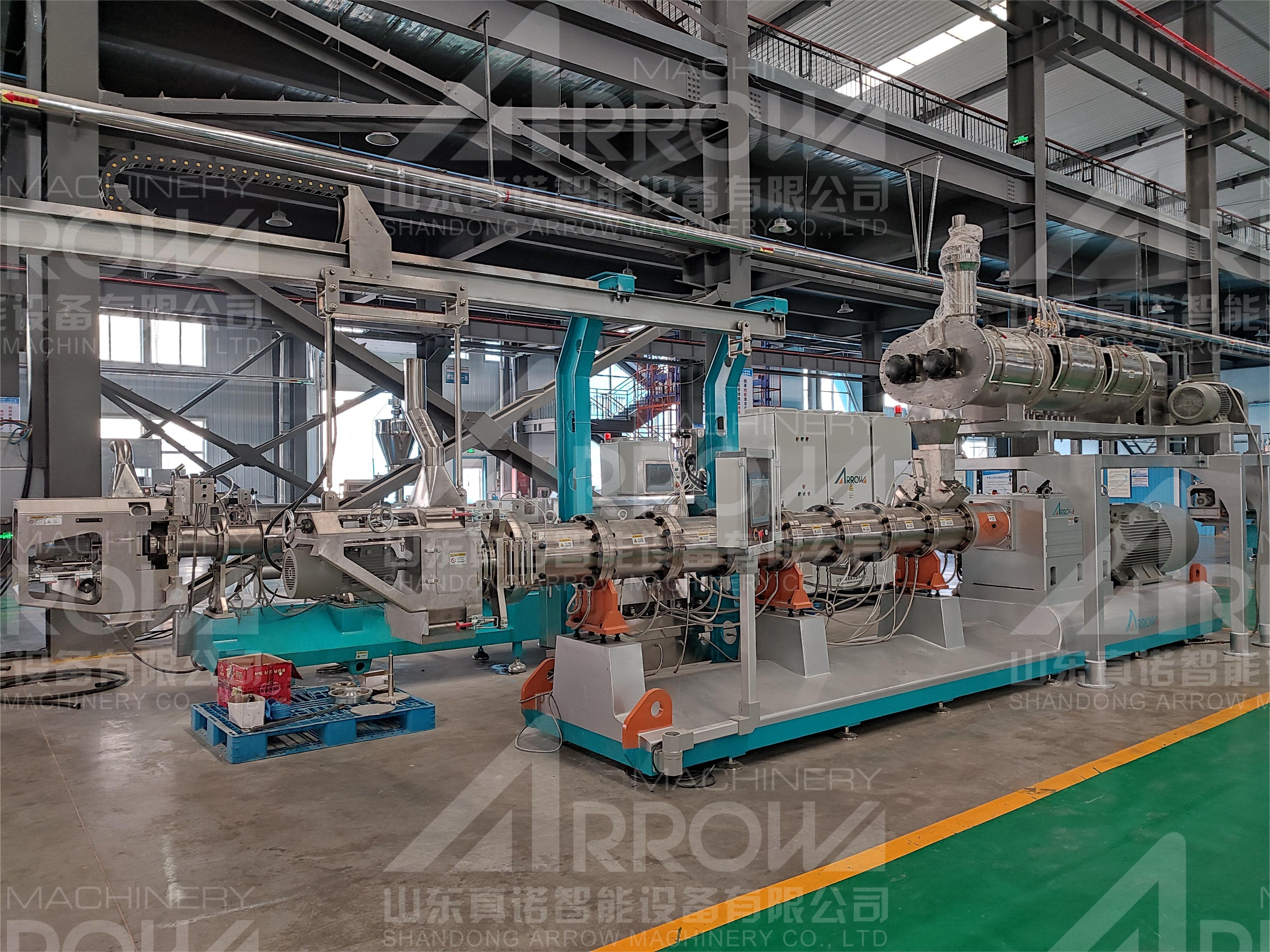 What is Fish Feed Production Line?
  Rapid development of pet e-commerce online platforms
 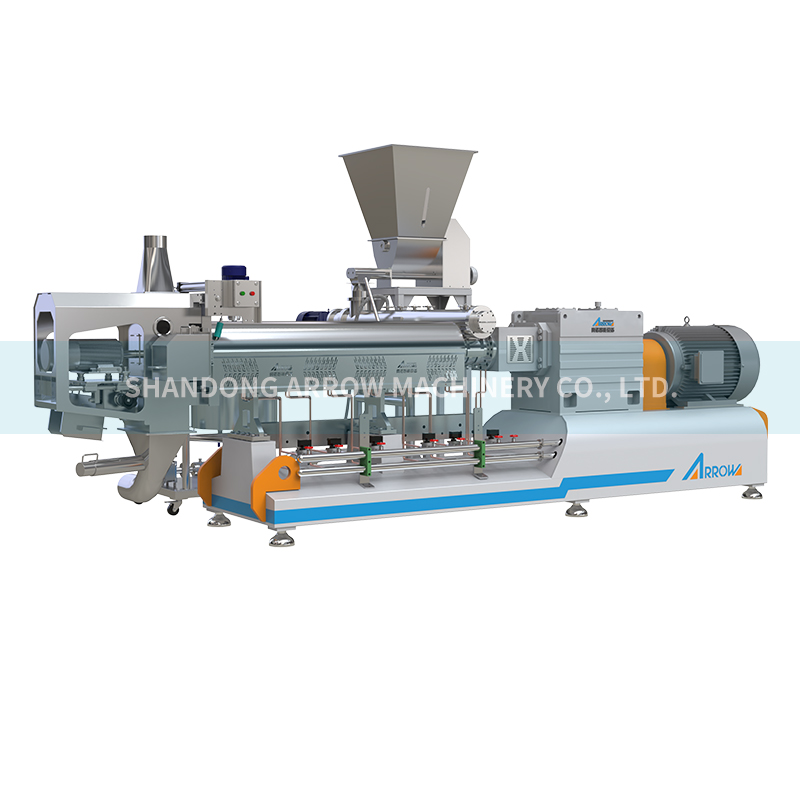 Reverse rotation twin-screw extruders
  Domestic pet food market development