
How to Solve Oil Bleed in Baked Pet Food | Shandong Arrow Machinery
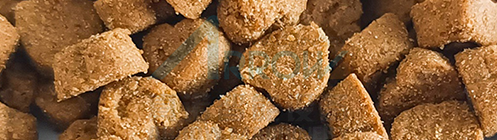
Solving Oil Bleed in Baked Pet Food: From Fat Stability Science to Equipment Solutions
In the production of baked pet food and twin-screw extruded kibble, oil bleed (surface oiling, grease leakage, and greasy stickiness) is one of the most persistent quality bottlenecks. Surface grease not only compromises visual appeal and texture but also significantly shortens shelf life due to lipid oxidation.
Why is fat so prone to phase separation and migration? In this technical guide, we analyze the underlying food emulsion principles and provide engineering solutions from the equipment perspective.
1. Why Does Fat "Bleed Out" from Pet Food?In a meat batter matrix (meat, fat, water, functional proteins, starches, and additives), lipids are non-polar molecules while water is polar—making oil and water naturally immiscible.
To keep fat stably dispersed within the kibble structure, it must be sheared into fine micro-droplets and encapsulated by proteins or emulsifying agents:
Ideal State: Fat droplets are homogeneously dispersed and encapsulated by a protein/hydrocolloid matrix.
Droplet Size Rule: The smaller the fat droplet size, the more stable the emulsion system.
The Core Risk: Larger fat droplets easily coalesce, leading to phase separation and eventual surface oil bleeding.
| State | Characteristics | Outcome |
| Emulsified fat | Encapsulated by protein/emulsifier, miscible with water | Stable, no oil bleeding |
| Free fat | Unencapsulated, freely aggregated | Product oil bleeding, oil spots, sticky surface |
3. The Limitations of Conventional Approaches
Common industry methods to combat oil leakage often face physical limitations:
Process Adjustments: Modifying chopping temperatures, salt concentration, or ingredient addition sequences—yet process-only improvements have limited scope.
Formula Tweaks: Reducing oil percentage or adding high-cost protein powders—this frequently compromises palatability and inflates raw material costs.
Starch Adsorption: Relies merely on physical adsorption; fat is not truly stabilized and easily leaches out during high-heat processing or shelf storage.
The Underlying Problem: Traditional methods fail to fundamentally transform the physicochemical state of fat within the matrix.
4. The Equipment-Driven Root Solution: Pre-Emulsification & Precision Forming Control
A truly reliable solution stabilizes fat into an oil-in-water (O/W) micro-emulsion during the mixing and extrusion phases, rather than relying on downstream fixes.
This is where the core engineering capability of Shandong Arrow Machinery Twin-Screw Extruders and Low-Temperature Baking Lines excels:
(1)High-Shear Emulsification of Twin-Screw Extruders
The specialized twin-screw profile provides intense shearing, mixing, and dispersion. In the barrel zone, fat is thoroughly combined with functional proteins and emulsifiers to create a stable, sub-micron emulsion matrix—drastically reducing free fat and mitigating oil bleed risks.
(2)Low-Temperature Baking Advantages
Compared to conventional high-temperature puffing, low-temperature gentle baking (60°C–120°C) exerts minimal thermal stress on the established emulsion structure, preventing fat migration and phase separation. Multi-zone temperature uniformity and precise dehydration curves ensure a crisp, uniform, and dry surface.
(3)Integrated Process & Equipment Synergy
Shandong Arrow provides complete turnkey solutions from Micro-Shear Mixing → Pre-Emulsification → Precision Extrusion → Multi-Zone Baking & Drying, empowering manufacturers to achieve optimal kibble surface dryness without unnecessary formulation costs.
5. Conclusion & Key Takeaways
Surface oil bleeding in pet food may appear to be a formulation issue, but at its root, it is an equipment capability issue regarding emulsification and thermal processing control.
By partnering with Arrow Machinery, pet food brands and contract manufacturers achieve:
(1)Minimized Free Fat: Dramatically lowered risk of surface grease and packaging oil spots.
(2)Dry & Crisp Kibble Surface: Premium texture, appetizing appearance, and higher consumer satisfaction.
(3)Extended Shelf Life: Reduced lipid oxidation and fewer customer complaints or product returns.
Need Help with Baked Kibble Quality?
If you are experiencing oil bleed or texture inconsistencies in your baked or extruded pet food lines, contact Shandong Arrow today for tailored equipment and process recommendations!
 Visit Shandong Arrow Machinery at Pet Fair SEA 2026 | Booth H09A
 How Is Wet Pet Food Made? A Complete Production Guide
 How to Build a Profitable Pet Stuffed Food Processing Line?
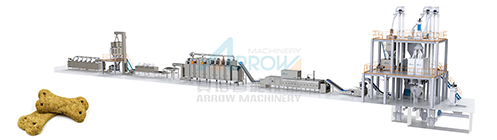 Pet Baked Food Production Line – Premium Pet Food for Healthier Pets
 Shandong Arrow: High-Quality Pet Treat Equipment
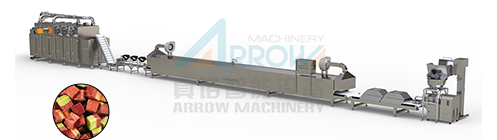 How to Select the Right Pet Treat Production Equipment for Your Factory?
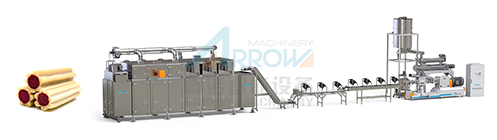 Dog Chew Production Line ‑ High‑efficiency Pet Treat Extrusion Machinery
 Pet Food Production Solutions: Meet Us at W9R11 at Pet Fair Asia
 How to Select the Right Pet‑Food Extruder for Your Production Line
 Upgrade Your Pet Food Production with Our Advanced Processing Equipment!
 How Important Is the Extruded Pet Food Manufacturing Process? A Complete Overview
 How to Improve Wet Pet Food Production Efficiency
 Pet Baked Food Processing Technology & Market Trends | Complete Solutions for Pet Food Production
 Intelligent Pet Snack Production Line: Safe and Efficient
 The New High-End Pet Wet Food Production Line Has Been Officially Launched
 AYT Series Twin-Screw Extruder Dedicated to Pet Treats
 Is Cold Extrusion Technology Setting New Standards For Pet Snack Production
 Pet Snack Extrusion Production Line - Dog Chew Equipment | Food Machinery
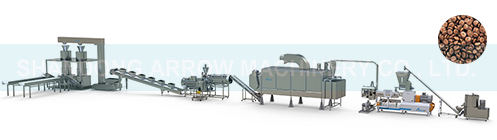 Pet Food Processing Line: Efficient and Intelligent Modern Solution
 How are pet baked foods produced?